Our Estate
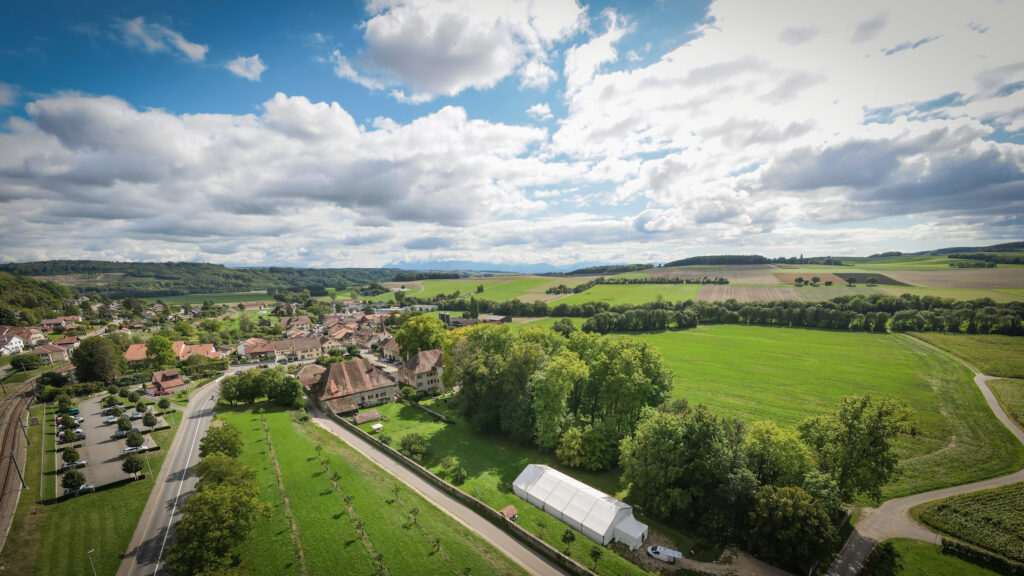
The vineyard of Château d’Eclépens is located between Eclépens and La Sarraz
The vines are located beneath the Roman road that connects the two villages, at the foot of Mormont hill, which overlooks the Orbe plain. This south-facing location, naturally protected from the north wind, provides the vineyard with a mild and sheltered microclimate. The vegetation around it is almost Mediterranean in its diversity, while the fauna is particularly rich. This biodiversity contributes to the site’s natural value, which is listed in the Federal Inventory of Landscapes.
The vines are planted on a south-facing slope, in medium to heavy, well-drained soils that are particularly favorable for viticulture. The terroir is made up of crumbled Cretaceous limestone, which mixes with the Rhône moraine deposited along the banks of the Venoge. This south-facing location provides the vineyard with a mild and sheltered microclimate. The vegetation around the vines is almost Mediterranean. The fauna exhibits great diversity, justifying its protection under the federal landscape inventory. The vines are planted on a south-facing slope and are well protected from the north wind, in medium to heavy, well-drained soils. These soils are particularly well-suited for viticulture. The terroir is composed of crumbled Cretaceous limestone that extends and mixes with the Rhône moraine along the banks of the Venoge.
Château d’Éclépens is one of Switzerland’s oldest wine estates. A diploma drawn up in Lausanne in 814, during the reign of Louis the Pious, son of Charlemagne, already mentions imperial vineyards in Maurmont near Éclépens (Eclepedengis). As a precursor, Gamay was introduced to the estate long before it became one of Switzerland’s most planted grape varieties, alongside Pinot Noir. Gamaret, Garanoir, and various Cabernets were added to this range over time. For white wines, Chasselas, Doral, and Pinot Gris have been cultivated and aged on the estate for several decades.
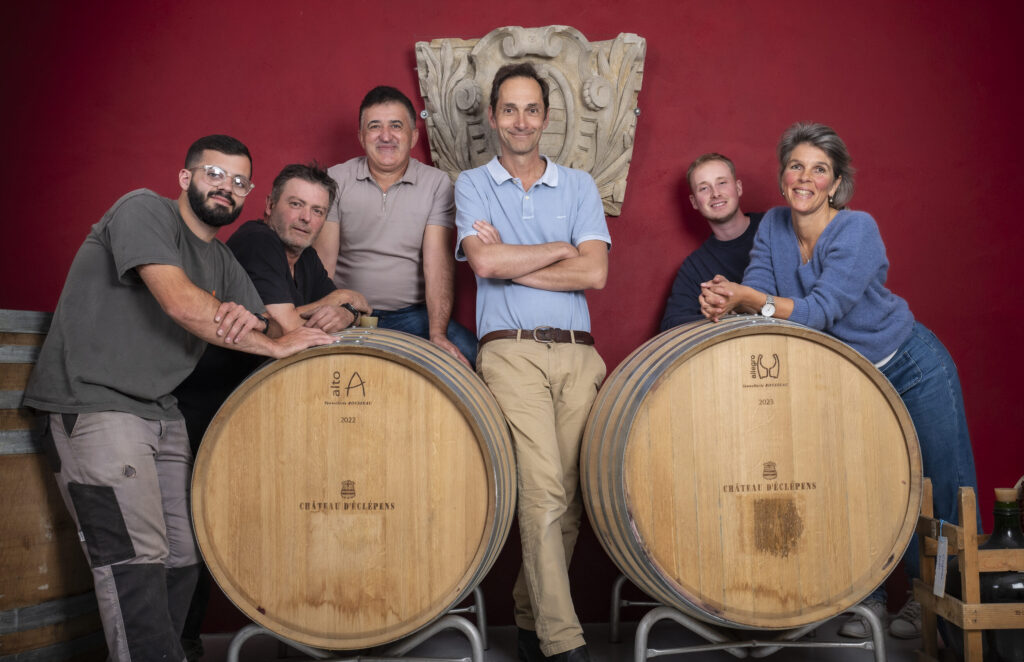
The estate is cultivated entirely using organic farming methods and is a member of Bio Suisse. The family is committed to sustainable viticulture, respectful of the land and focused on future generations. In keeping with tradition, the grapes are hand-picked to preserve their integrity as much as possible until pressing. From pressing to vinification, from aging to bottling, every step is carried out at the Château. As a result, 100% of the production is vinified, aged, and bottled on site.